Hilda Gives the Weather
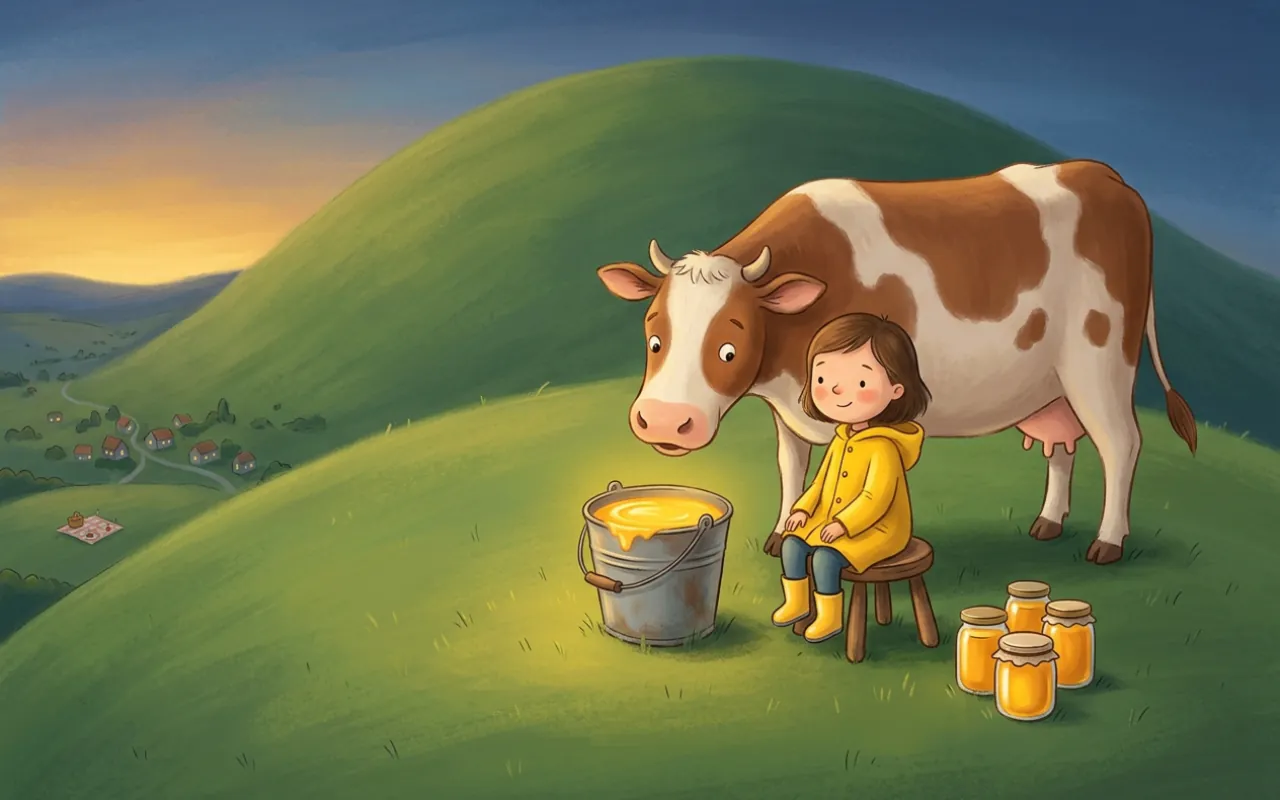
Every morning at six o’clock, Dot carried her stool and her bucket to the top of the round green hill and milked Hilda. And every morning, Hilda gave the weather.
On a sunny morning the bucket filled with sunshine, warm and yellow and thick enough to spread. On a foggy morning it filled with fog, which spilled over the rim and wandered off across the field. Thunder milk rumbled in the jug and had to be drunk quickly, before it went off. When it snowed, Hilda gave ice cream.
After every milking, Hilda turned round to look in the bucket, faintly surprised, as if none of this had ever happened before.
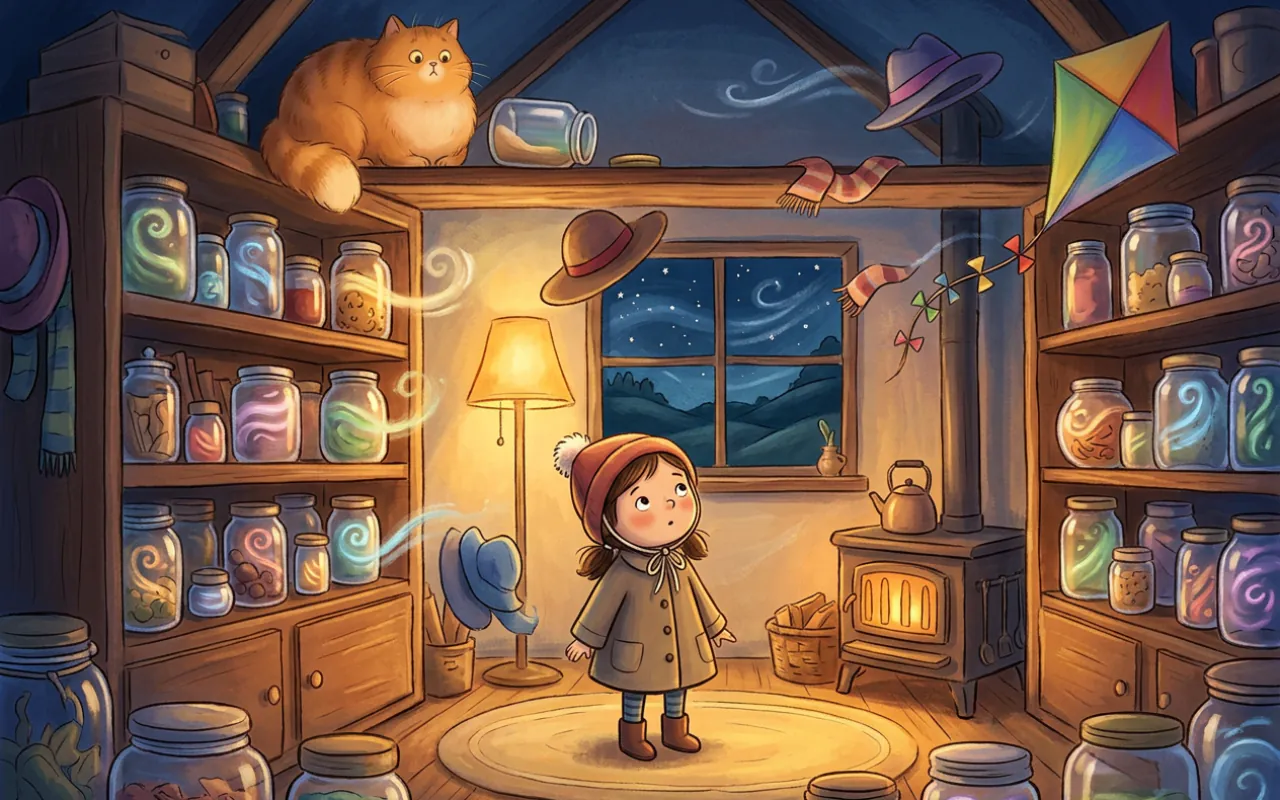
Dot was a sensible girl. She believed there was no problem in the world that could not be solved with the right jar and a good, firm label. The pantry shelves at the farm were full of jars, and every one was labelled in large capitals: FOG, OCTOBER. THUNDER, DRINK NOW. DRIZZLE, VARIOUS.
There was never any sunshine on the shelves. That was because of Grandad. Grandad liked sunshine better than anything. Once, when Dot tripped on the back step and spilled a whole bucket of it in the yard, Grandad went out and sat down in the puddle. He stayed there until teatime with his eyes shut, humming.
The trouble was the picnic.
Every summer the village at the bottom of the hill had a picnic on the green, with a long table and a sack race and a cake the size of a cartwheel. And three summers running it had been rained off. The first year the sandwiches floated. The second year the tablecloth blew into the river and was last seen heading for the sea. The third year it rained so hard that nobody came at all, except the baker, who stood under the bandstand with the whole cake and ate one slice, to be polite.
This year the picnic was on Saturday. On Monday morning Grandad came down to breakfast, rubbed his left knee, and said, “Saturday will pour.”
Grandad’s left knee had never once been wrong.
Dot looked out of the window. Monday was blue from one side to the other.
“Then I’ll keep some of today,” she said.
“Hilda only gives what’s out there,” said Grandad.
“That’s why I’m doing it today,” said Dot.
Nobody knew how long sunshine kept, because there had never been any left by lunchtime. But milk kept in a cold cellar, and Dot didn’t see why sunshine shouldn’t. She milked Hilda twice that morning, which Hilda put up with, and she filled every clean jar in the house. On each one she wrote SUNSHINE, MONDAY. DO NOT DRINK. She underlined DO NOT DRINK, and she looked at Grandad while she did it.
The cellar had never been so cheerful. With the jars on the shelf it was as bright as noon down there, and warm enough to grow tomatoes.
“That sun is for the picnic,” said Dot.
“I know,” said Grandad, who had read the labels three times.
On Tuesday it was blowy. The bucket filled with a brisk little wind, which took Dot’s hat off her head and dropped it neatly onto Hilda’s. Hilda looked faintly surprised, kept it on, and set off down the field.
Tuesday was also butter day. While Dot was chasing her hat, Grandad went down to the cellar for the cream, the way he did every Tuesday, and sat by the stove turning the churn. After a while he put his head out of the window.
“This butter’s come out very yellow,” he said.
“That’s nice, Grandad,” said Dot, who was halfway across the field and did not get her hat back until teatime.
Remember that butter. Dot didn’t, not until Friday.
On Wednesday it was foggy. Dot had no use for fog that week, so she poured the bucket into the duck pond. The ducks played hide-and-seek in it all afternoon. Nobody won, because nobody could find anybody, and they had a lovely time.
Then Dot went down to the cellar to look at her jars, and they were still shining.
On Thursday she went down again, and that was how she found out that sunshine keeps for three days.
Sunshine past its date does not go sour, the way milk does. It goes overcast. Every jar on the shelf had turned a soft, dull grey, and when Dot held one up to her ear, she could hear a little patter inside the lid.
She sat on the cellar step for a long time. Then, because she was sensible, she fetched her pen and did what had to be done. She crossed out every label, and underneath, very neatly, she wrote: DRIZZLE (WAS SUNSHINE).
Grandad came down and sat on the step beside her. He didn’t say anything clever. He held her hand for a while, and then he said that drizzle was just the thing for the beans. And he carried the jars out to the garden himself, one at a time, so that she wouldn’t have to.
On Friday Dot got up before the rooster, before Grandad and before the sun. The rain was heaped up over the far hills, waiting for Saturday. If she was quick, she thought, she could milk Hilda before it came and catch one last bucket of fine weather.
She was quick. But the sun was still in bed, and the rain was nearly here, and what came into the bucket was damp. Plain damp, the grey, clammy kind that gets into socks.
Hilda looked into the bucket, faintly surprised, and a little damp about the ears.
Dot wrote DAMP on a label, because it had to be called something, and sat on her stool with her chin in her hands. Jars were no good. Getting up early was no good. Was there anything at all that kept?
Jam kept. Cheese kept. Butter kept a whole week in a cold larder.
And Dot remembered Grandad on Tuesday, with his head out of the window, saying the butter had come out very yellow.
She ran down the hill so fast that she left the bucket behind, and Hilda had to look after it.
In the larder, on the cold slate shelf, there was a pat of butter wrapped in paper, and it was glowing through the paper like a lamp. When Dot picked it up, it was warm.
“Grandad,” she said, “which jar did you churn on Tuesday?”
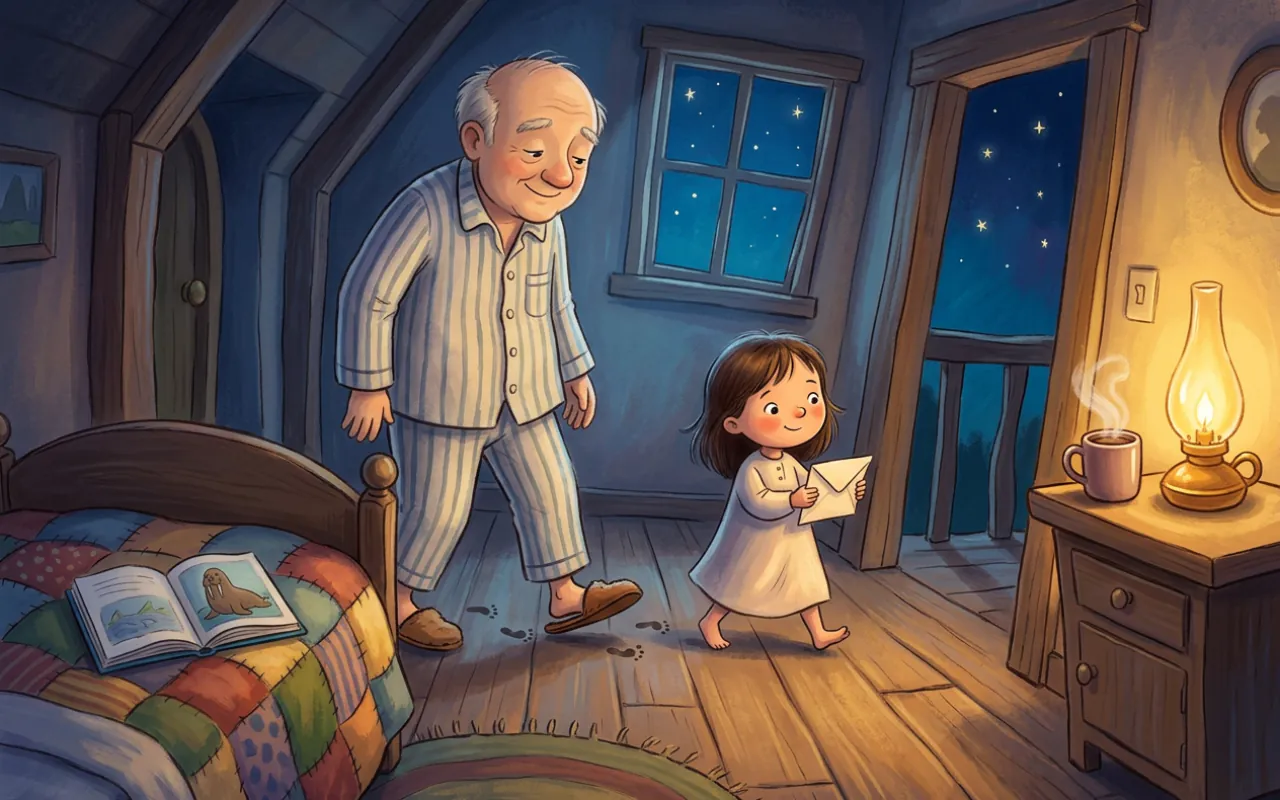
Grandad came in his pyjamas and looked at the butter. “The one on the end,” he said. “It said do not drink. I didn’t drink it.”
Dot hugged him, butter and all. Then she took her pen and wrote, in her very largest and firmest capitals, SUNSHINE (NOW BUTTER).
On Saturday it poured. Grandad’s knee was right, as usual.
The baker had put the long table out on the green anyway, because the baker would not give up. Everyone else stayed indoors and looked out at the rain. Dot came down the hill with two loaves under her arm and the butter in her pocket. Grandad came behind her, and Hilda came behind Grandad, because Hilda would not be left out.
Dot sat at the long table in the wet and cut the bread. Then she looked at the butter, which was about the size of a bar of soap.
“There isn’t enough,” she said.
“A little sunshine goes a long way,” said Grandad.
The first slice went to Hilda, naturally. Hilda ate it in one bite. A small round sun came out about a foot above Hilda’s ears, and the rain stopped just above it, all the way round, as if someone had put up a very bright umbrella. Hilda looked up, faintly surprised, and steamed a little, and was dry.
The second slice went to Dot, because Grandad insisted.
The people in the windows saw a brown cow and a small girl sitting dry and warm in the middle of a downpour, and they came out to find out how.
Dot spread the butter as thin as it would go, and it went a very long way. Everybody got a slice. Everybody got a sun. The children ran the sack race in the pouring rain with twelve little suns bobbing along above them, and not one sack got wet. The tablecloth stayed on the table. The cake was eaten to the last crumb, and nobody ate a single slice just to be polite.
Grandad had his slice and sat back under his sun with his eyes shut. Then Dot spread one more, with the very last scrape of butter, and gave it to him.
“That one’s for not drinking it,” she said.
Two slices made Grandad’s sun twice as hot, so he had to put his hat on, and the brim steamed all afternoon.
It was the best picnic the village had ever had, and it rained the whole time. Everybody went home dry and warm and full of cake, and every single nose was rosy pink. Grandad wore his hat all the way up the hill, steaming like a kettle. And Hilda walked home in front of them through the pouring rain, with a small sun still shining over both ears, looking faintly surprised, and very pleased indeed.